Launch offer — valid today only

📄 Digital book in PDF · read it on your phone or print it

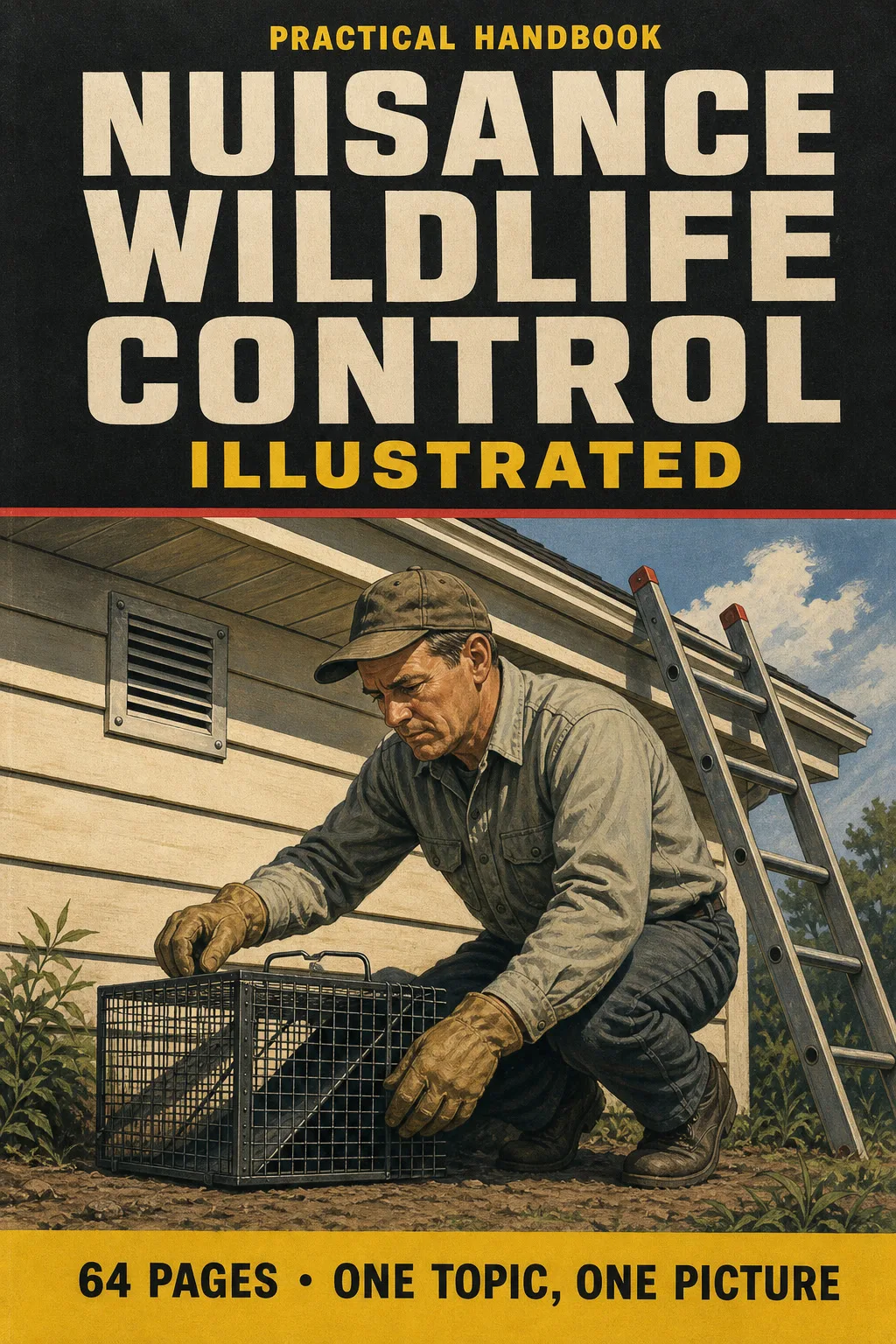
The New York NWCO Exam in Drawings: Which Trap, Where and When One Topic on Every Page

Raccoons and bats, tracks and damage, cage and body-gripping traps, trap check intervals, the L-shaped footer, bat exclusion, rabies safety and the annual report. Every topic gets its own page: the drawing first, then what you need to remember. 64 illustrated pages.

START STUDYING THIS WAY

🔒 Secure checkout · PDF by email · 30-day guarantee

Every topic, its own pageEach rule and each trap set drawn, with the explanation right beside it
64 illustrated pages8 parts, from the NWCO license to the final exam checklist
Up-to-date sources6 NYCRR Part 184, NYS Environmental Conservation Law and NYS Department of Health rabies guidance
PDF by emailFormat

Look Inside the Book

Every page has one big drawing and a box with the numbers, rules and steps you need to know:

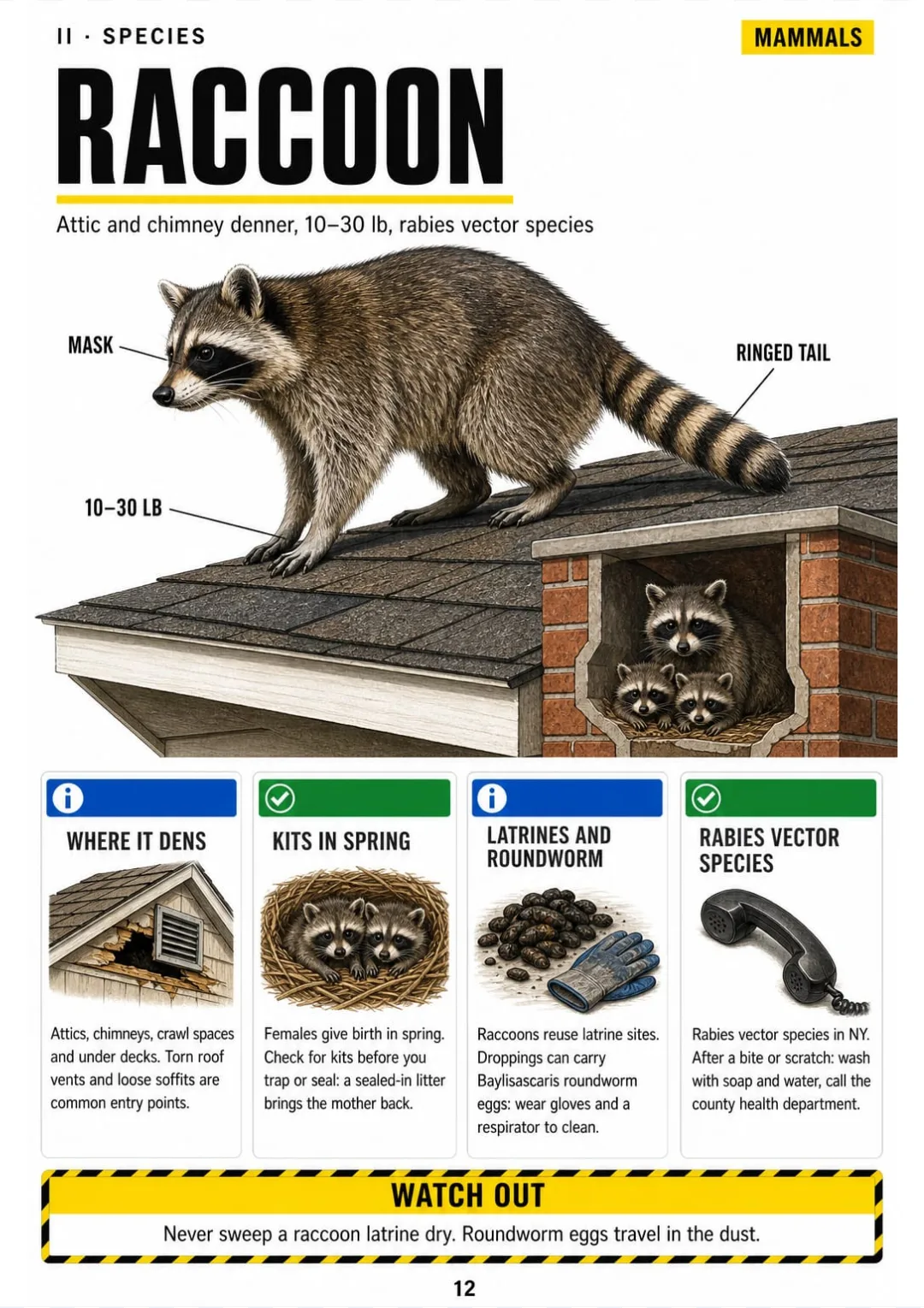
Raccoon: 10–30 lb, kits in spring, latrines with Baylisascaris risk, rabies vector species in NY.
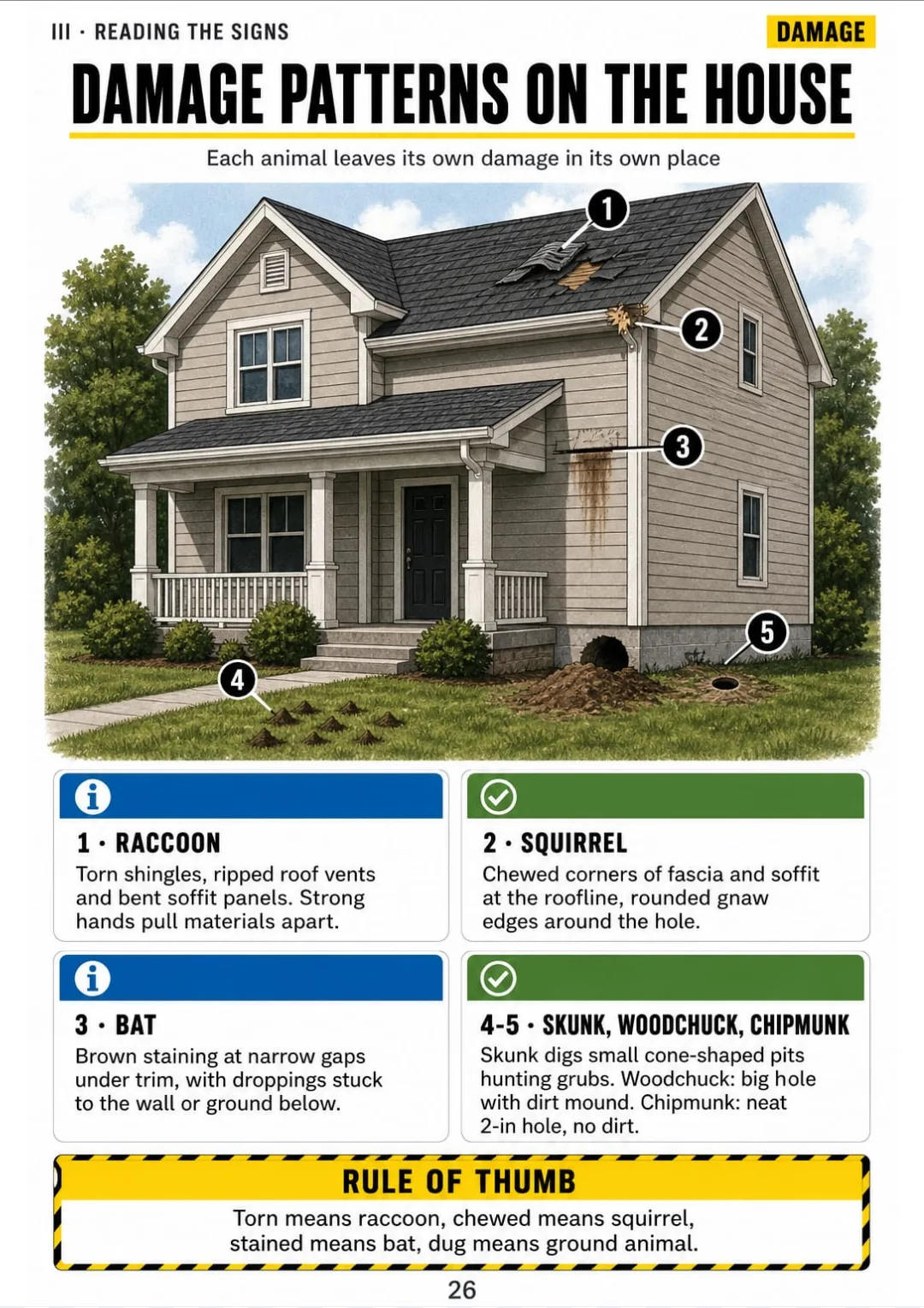
One house, five damage marks, five different animals
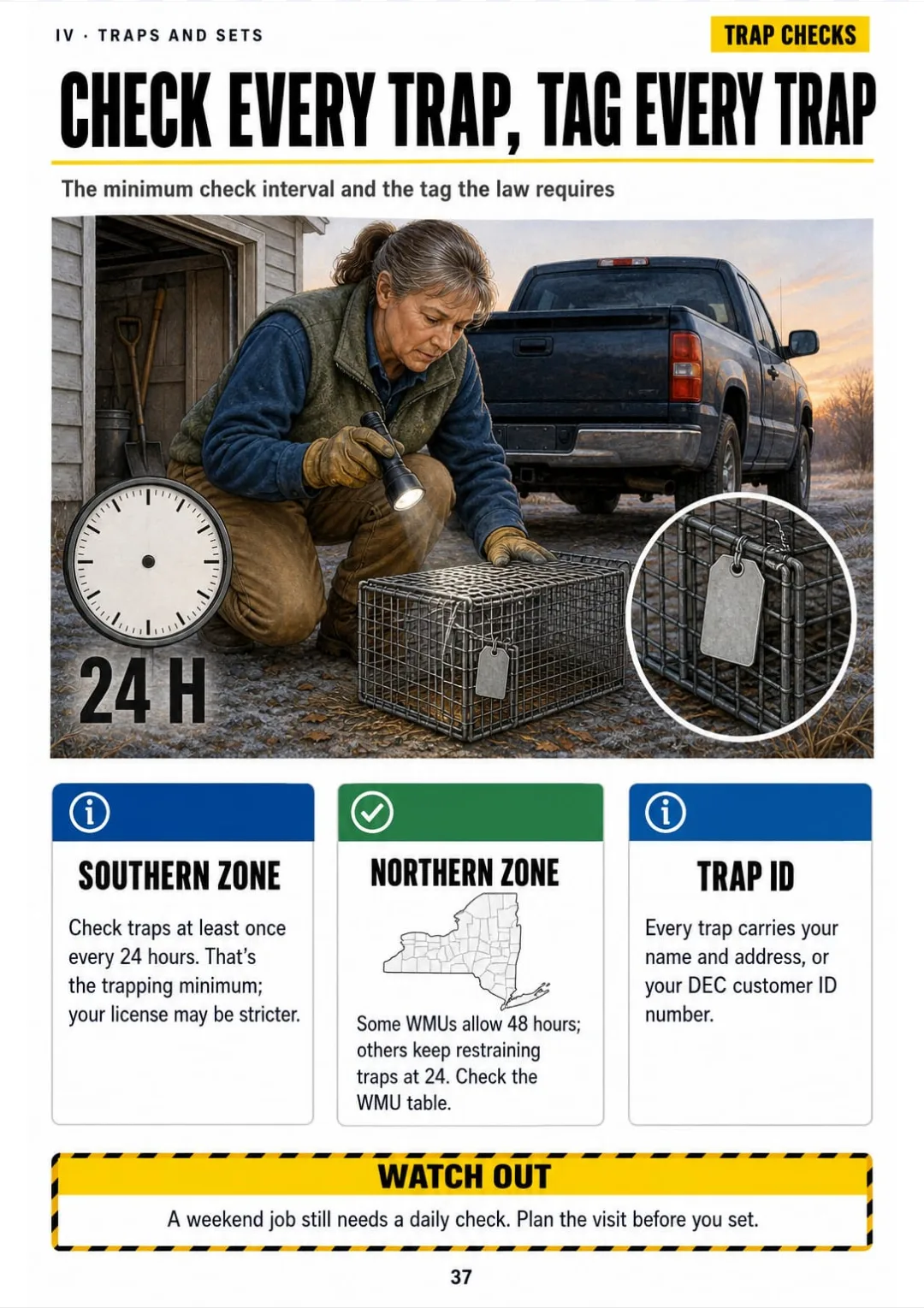
Southern Zone: check at least every 24 h · name and address or DEC ID on each trap
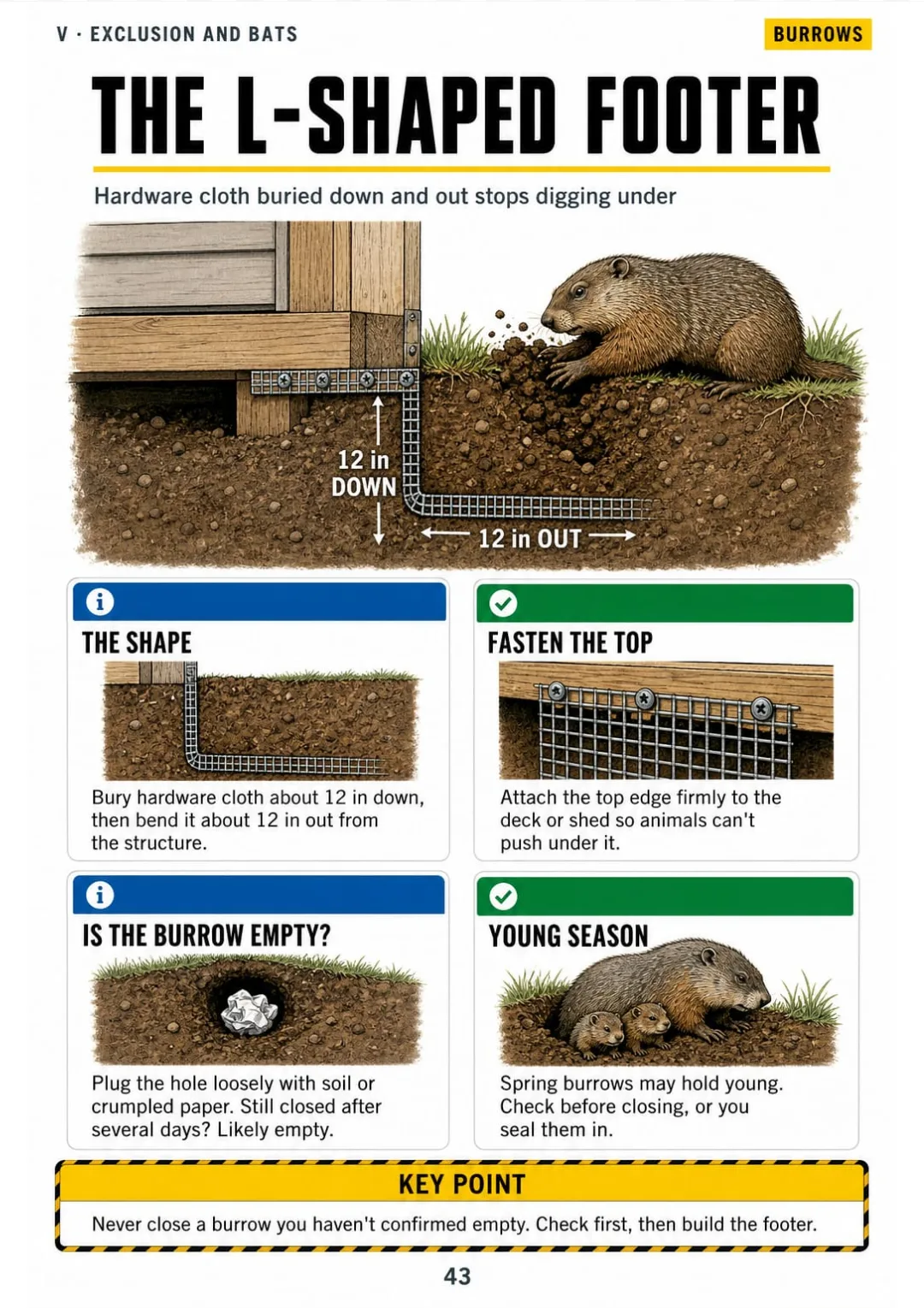
L-shaped footer: hardware cloth about 12 in down and 12 in out.
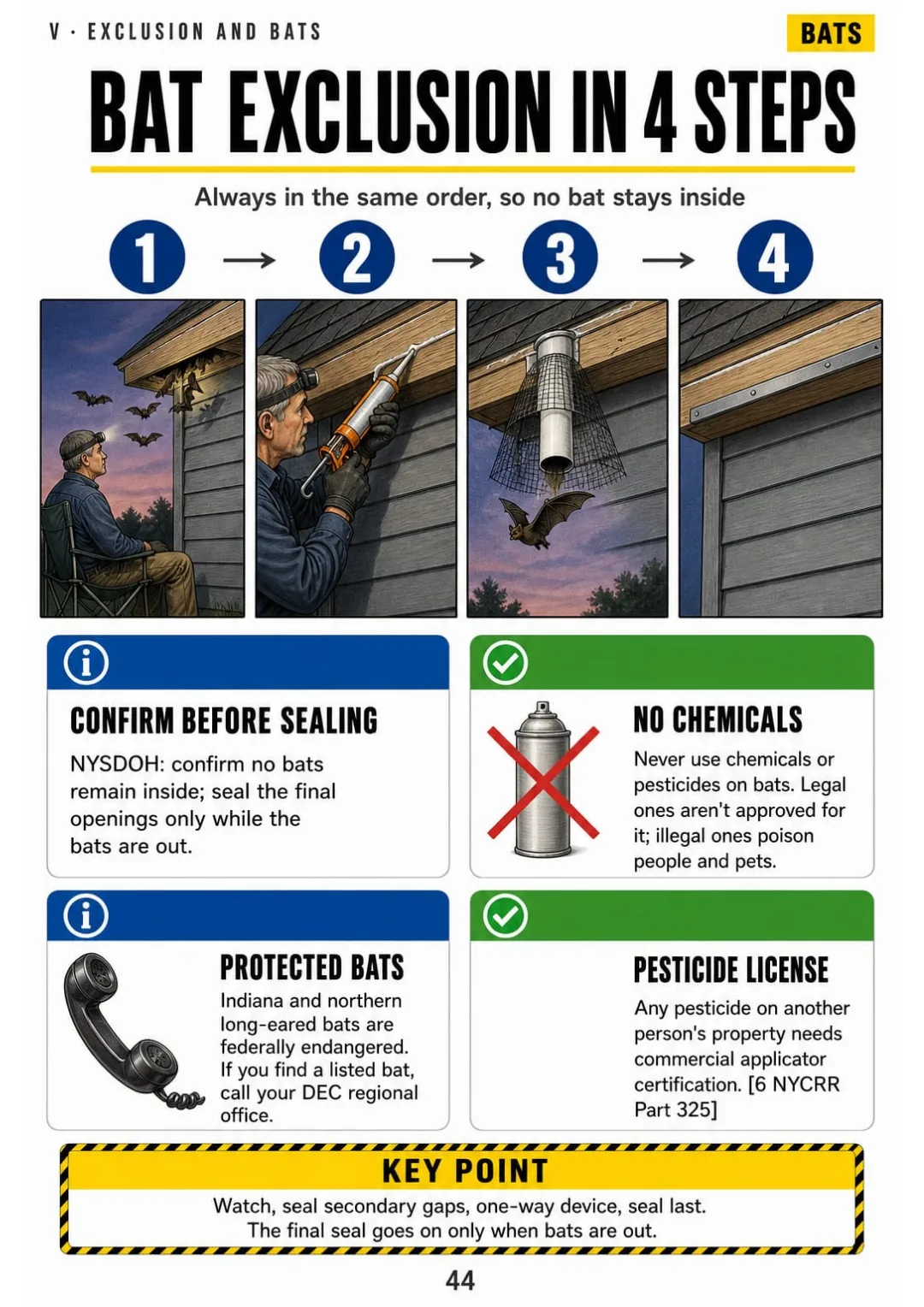
Watch at dusk, seal secondary gaps, one-way device, then seal the exits.
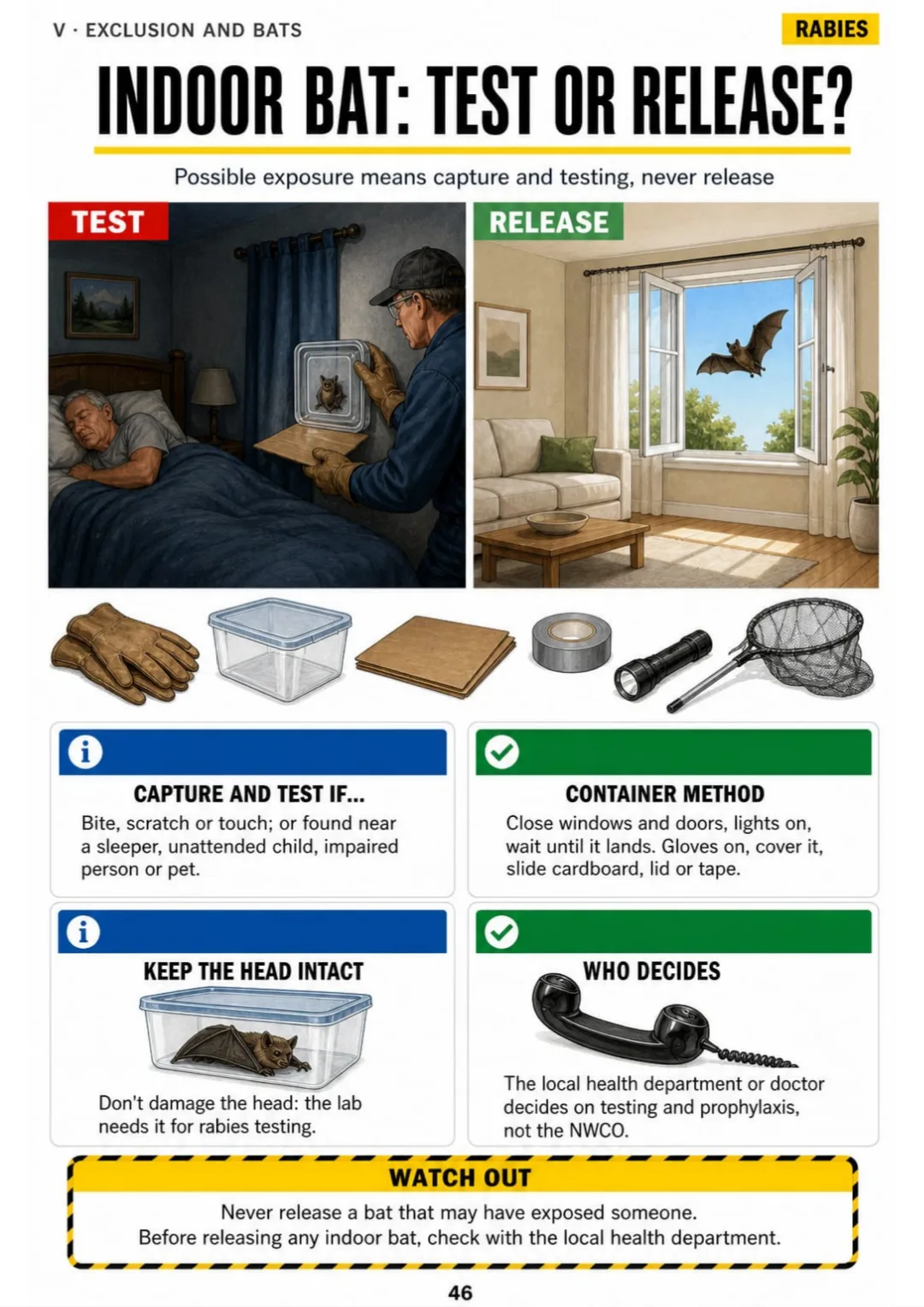
Possible exposure: capture the bat, keep the head intact, call the local health department.
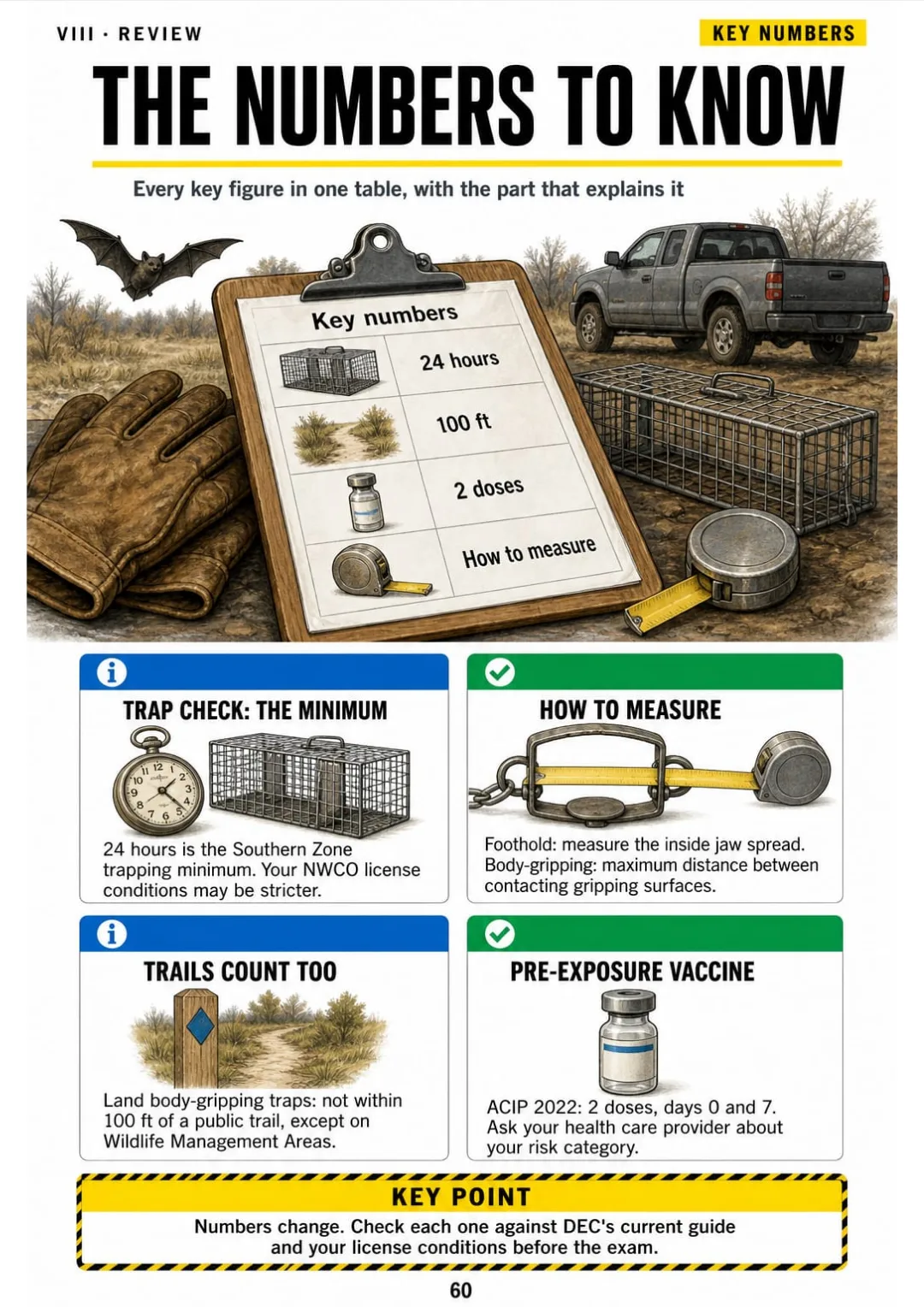
$50 a year · expires Sept 30 · 100 ft · 24 h · 5¾ in · 7½ in · 5 days
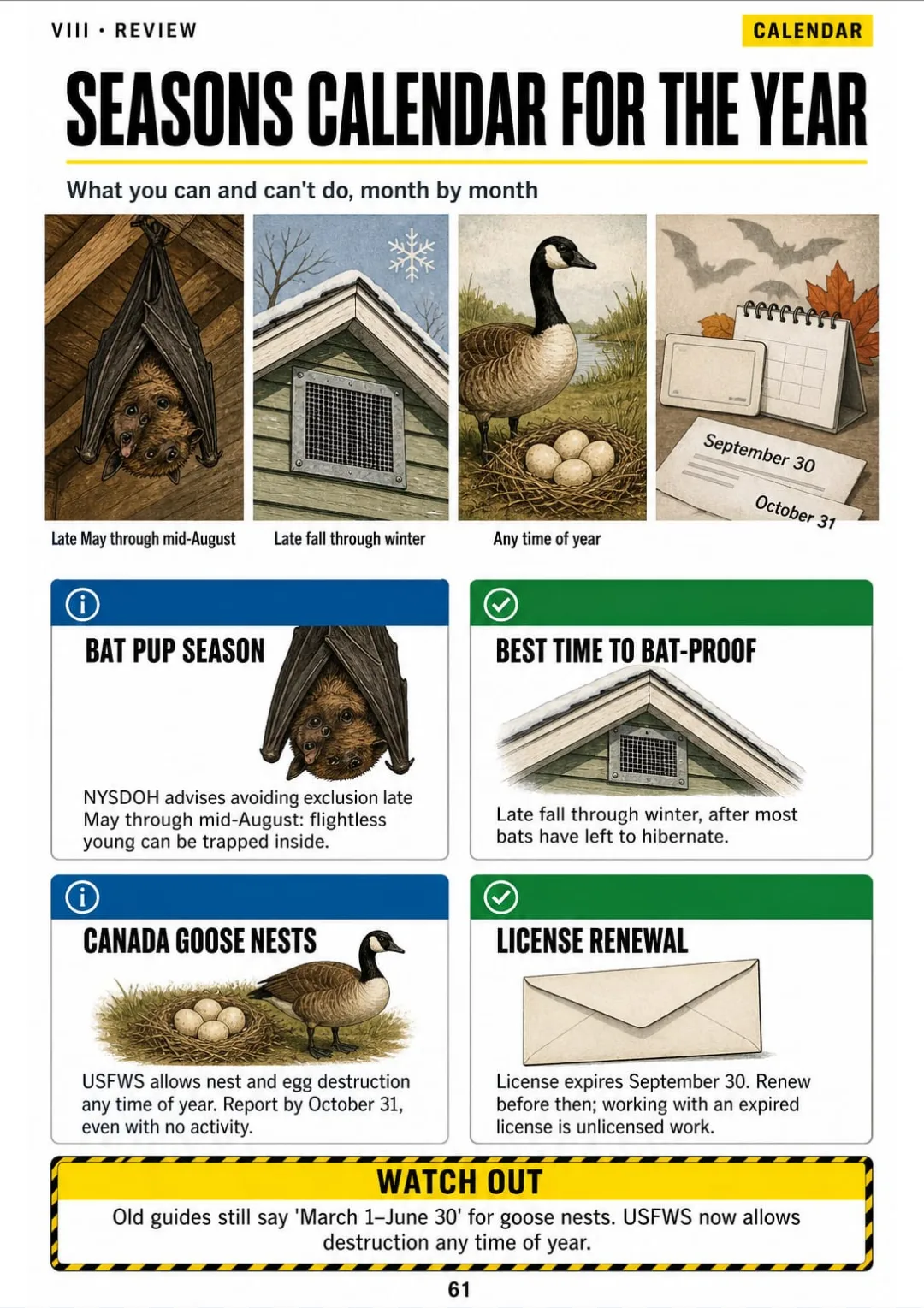
Avoid bat exclusion late May–mid-August · bat-proof late fall–winter · goose report by Oct 31

Swipe to see more →

These are real pages from the book. The table of contents is the full one: 8 parts and 60 topics.

The Problem Isn't You. It's How It Was Explained to You.

You're in the truck with a beaver call and a body-gripping trap on the seat, and the question hits you: can this size go on land, or only in the water?

You did read it. But the manual covers it in paragraphs: trap sizes, land sets, water sets, open seasons, exceptions. When it's all text, the sizes and the places run together.

Southern Zone: check at least every 24 h · name and address or DEC ID on each trap

In this book it's one page: land on one side, water on the other, each trap drawn at its size, the 7½-inch limit for land in a box and the open beaver and otter season next to the water set.

Same with the trap check rule (at least once every 24 hours), which species you can release on site and which you can't, cage trap sizes, the bat pup season and the L-shaped footer: each one gets its own page.

You see which trap goes where and you make the set without opening the regs again.

COMPARE FOR YOURSELF

The Same Topic, Two Ways to Study It

THIS
  • The manual: line after line
  • Holes, tracks and chew marks explained only in words
  • You show up to the exam with doubts
Structural damage attributable to nuisance wildlife varies considerably according to species, season and point of access. Torn shingles, damaged soffits, displaced flashing and disturbed roof vents may indicate raccoon activity, whereas rounded gnawed openings at roof edges, fascia boards and gable vents are more commonly associated with tree squirrels. Burrow entrances adjacent to foundations, porches, decks or sheds suggest woodchuck or skunk presence, while staining and guano accumulation near ridge lines and chimneys may indicate bat roosting. Accurate identification of the responsible species should precede the selection of any control measure.
FOR THIS
  • The whole house in one drawing
  • Each damage mark and its animal in a box
  • Guano by the chimney: bats. Rounded hole at the roof edge: squirrels.
One house, five damage marks, five different animals
CONTENTS

Take a Look at the 8 Parts and 60 Topics

The license and the law, the 10 species, reading the signs, traps and sets, exclusion and bats, handling and safety, records and the client, and exam review: 64 pages, all illustrated.

IThe License and the Law · pp. 5-11
  1. What an NWCO License Lets You Do
  2. Getting Licensed: Exam, Application, Renewal
  3. Who Owns the Animal: Wildlife Belongs to the State
  4. Game, Furbearer, Unprotected: The Three Boxes
  5. Federal Layer: Migratory Birds and Endangered Bats
  6. Local Rules on Top of State Rules
  7. The Landowner's Permission, in Writing
IIThe Species You'll Meet Most · pp. 12-23
  1. Raccoon
  2. Striped Skunk
  3. Virginia Opossum
  4. Woodchuck (Groundhog)
  5. Eastern Gray Squirrel
  6. Red Squirrel and Flying Squirrel
  7. Eastern Chipmunk
  8. Bats: Big Brown and Little Brown
  9. Red Fox, Gray Fox and Coyote
  10. Beaver and Muskrat
  11. Nuisance Birds: Pigeons, Starlings, Sparrows, Geese
  12. Snakes and Other Occasional Calls
IIIReading the Signs · pp. 24-29
  1. Tracks Side by Side: Front and Hind Feet
  2. Droppings and Latrines
  3. Damage Patterns on the House
  4. Sounds and Timing in the Attic
  5. Rub Marks, Hair and Entry Holes
  6. The Inspection Walk: Ground, Walls, Roof, Attic
IVTraps and Sets · pp. 30-38
  1. Choosing the Method: Exclude, Trap or Both
  2. Cage Traps: Sizes for Each Species
  3. Placing a Live Trap: Where and How
  4. Baits and Lures by Species
  5. Repeating Traps and One-Way Trap Doors on Holes
  6. Body-Gripping Traps: How They Work and Where They're Allowed
  7. Foothold Traps and Cable Devices: The Rules
  8. Trap Check Interval and Trap ID
  9. Non-Target Captures: Cat, Dog, Protected Species
VExclusion and Bats · pp. 39-47
  1. Exclusion Basics: Find Every Opening First
  2. Materials: Hardware Cloth, Flashing, Sealant
  3. One-Way Doors for Squirrels and Raccoons
  4. Chimneys, Vents and Soffits
  5. Burrow Exclusion: L-Shaped Footer
  6. Bat Exclusion Step by Step
  7. When NOT to Exclude Bats: The Pup Season
  8. A Bat in the Living Space
  9. Bird Exclusion: Netting, Spikes, Vents
VIHandling, Release and Safety · pp. 48-54
  1. Rabies Vector Species in New York
  2. Release: Where You May and May Not Let an Animal Go
  3. Euthanasia: Acceptable Methods
  4. Carcass Disposal
  5. PPE and Zoonoses
  6. Handling a Trapped Animal Safely
  7. Orphaned Young and Wildlife Rehabilitators
VIIRecords and the Client · pp. 55-59
  1. The Job Log: What to Write Each Time
  2. The Annual Report to NYSDEC
  3. The Client Contract
  4. Explaining the Job to the Homeowner
  5. Vehicle Kit: What to Carry
VIIIReview and Exam Prep · pp. 60-64
  1. The Numbers to Know on One Page
  2. Seasons Calendar for the Whole Year
  3. Who to Call: DEC, Health Department, USFWS, Animal Control
  4. The Most Common Mistakes, Before and After
  5. Final Checklist Before the Exam

One Page, One Topic, All Clear

Think of it this way:

It's a June call. The homeowner hears scratching at dusk and finds droppings under the gable vent. You need to know if it's bats, and if you can exclude them this week.

You open the book to the seasons page and see the whole year drawn as a calendar: late May to mid-August marked as the pup season to avoid exclusion, late fall and winter marked for bat-proofing.

Watch at dusk, seal secondary gaps, one-way device, then seal the exits.

Same with raccoon tracks, cage trap sizes, the L-shaped footer, a bat in the living room and the annual report: each one on its own page.

Nuisance Wildlife Control Illustrated is 8 parts and 60 topics, all drawn, and it ends with the numbers to know, a seasons calendar and a final exam checklist.

What you see drawn, you don't have to memorize.

What's Inside Nuisance Wildlife Control Illustrated:

Ipp. 5-11

The License and the Law

What the NWCO license lets you do, getting licensed and renewing, who owns the animal, game vs. furbearer vs. unprotected, federal rules on birds and bats, local rules and written landowner permission.

IIpp. 12-23

The Species You'll Meet Most

Raccoon, skunk, opossum, woodchuck, gray, red and flying squirrels, chipmunk, bats, foxes and coyote, beaver and muskrat, nuisance birds and snakes, one species per page.

IIIpp. 24-29

Reading the Signs

Front and hind tracks side by side, droppings and latrines, damage on the house, attic sounds and timing, rub marks and entry holes, and the inspection walk.

IVpp. 30-38

Traps and Sets

Exclude or trap, cage trap sizes, placing a live trap, baits by species, repeating traps, body-gripping, foothold and cable device rules, trap check interval and non-target captures.

Vpp. 39-47

Exclusion and Bats

Finding every opening, materials, one-way doors, chimneys and soffits, the L-shaped footer, bat exclusion step by step, the pup season, a bat in the living space and bird exclusion.

VIpp. 48-54

Handling, Release and Safety

Rabies vector species in New York, where you may and may not release, acceptable euthanasia methods, carcass disposal, PPE and zoonoses, safe handling and orphaned young.

VIIpp. 55-59

Records and the Client

The job log, the annual report to NYSDEC, the client contract, explaining the job to the homeowner and what to carry in the truck.

VIIIpp. 60-64

Review and Exam Prep

The numbers to know on one page, the seasons calendar, who to call, the most common mistakes before and after, and the final checklist before the exam.

At the end of the book: The numbers to know on one page, a full-year seasons calendar, the most common mistakes before and after and a final exam checklist.
Plus: 2 Free Books

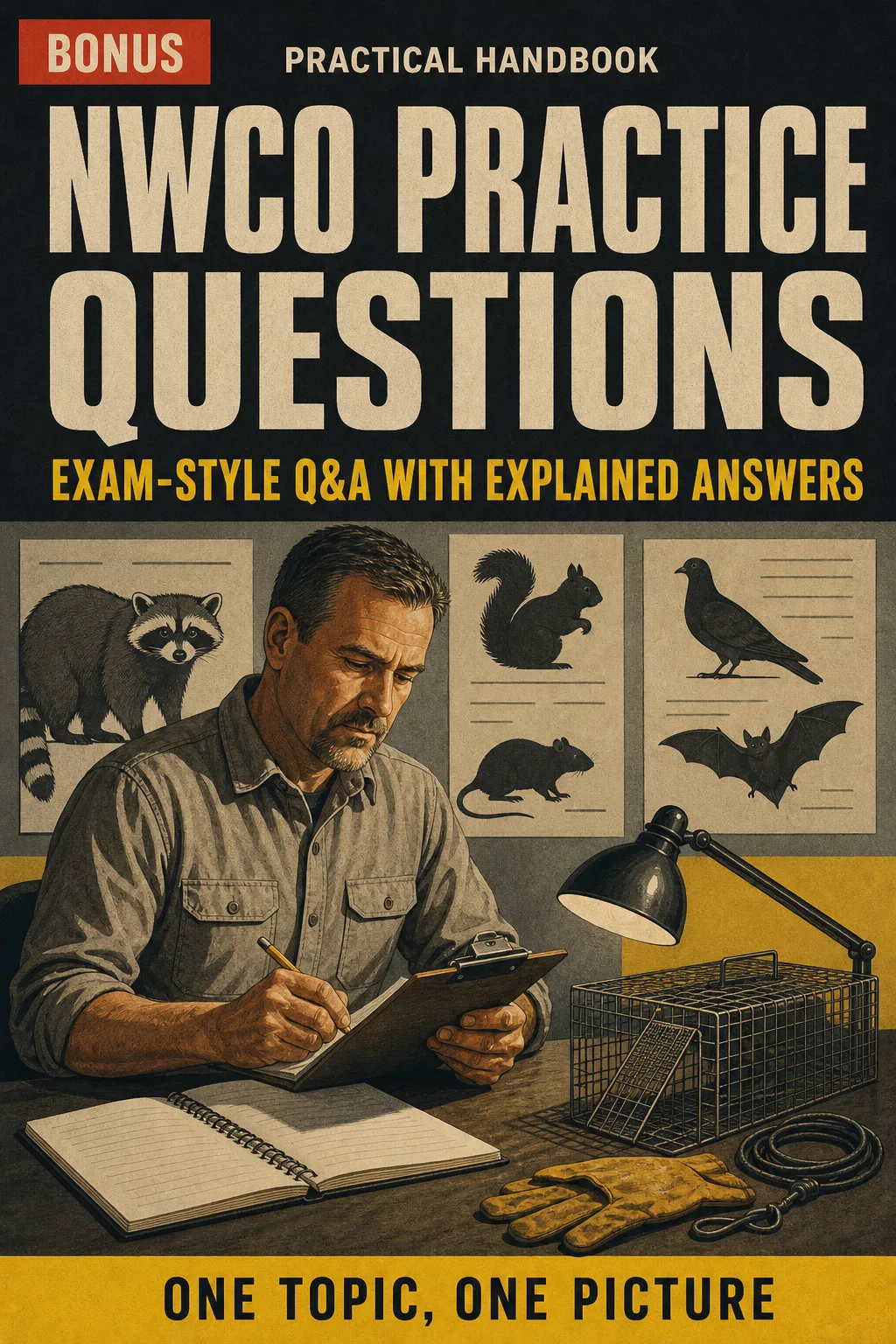
NWCO Practice Questions: Exam-Style Q&A with Explained Answers

BONUS 1: «NWCO Practice Questions: Exam-Style Q&A with Explained Answers»

Value on its own: US$ 17.90

Test yourself topic by topic and see right away why each answer is right, so you find your weak spots before exam day.

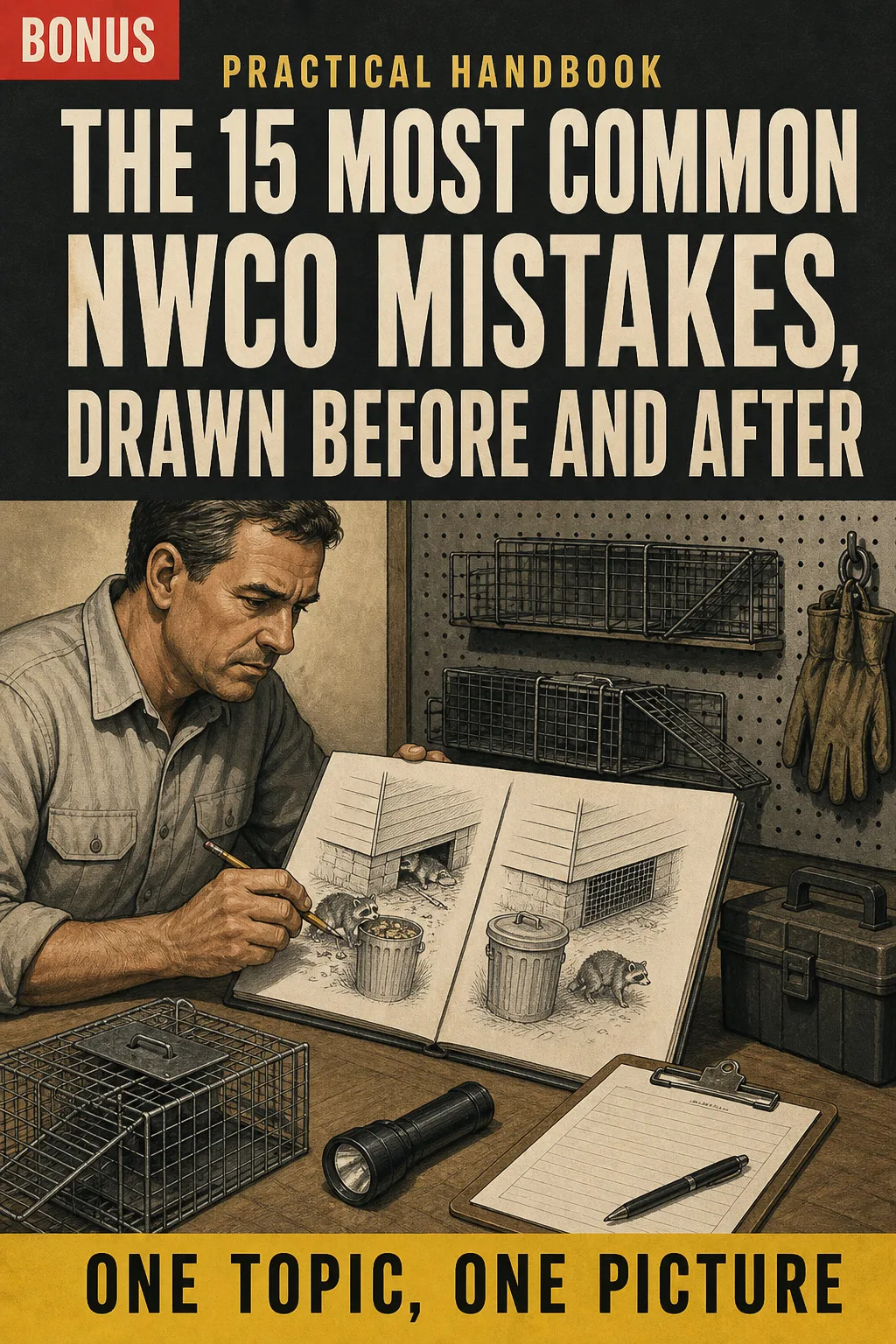
The 15 Most Common NWCO Mistakes, Drawn Before and After

BONUS 2: «The 15 Most Common NWCO Mistakes, Drawn Before and After»

Value on its own: US$ 14.90

Review the mistakes that cost the most on the job and on the exam, from wrong trap placement to sealing a bat in, one drawing each.

Nuisance Wildlife Control Illustrated with 2 Free Books

  • Nuisance Wildlife Control Illustrated: 64 illustrated pagesUS$ 63
  • BONUS 1: NWCO Practice Questions: Exam-Style Q&A with Explained AnswersUS$ 17.90
  • BONUS 2: The 15 Most Common NWCO Mistakes, Drawn Before and AfterUS$ 14.90
  • High-resolution PDF to printIncluded
Total value US$ 95.80
YOUR PRICE:
US$ 27
You save US$ 68.80
YES, I WANT NUISANCE WILDLIFE CONTROL ILLUSTRATED FOR US$ 27

📄 This is a digital PDF book sent to your email: nothing is printed or shipped.

Secure purchaseEncrypted payment30-day guarantee

PDF by email: We email you Nuisance Wildlife Control Illustrated as a PDF, together with the two free books. It's a single payment: no installments, no extra charges.

Who This Book Is For

You're studying for the NWCO license

You're studying for the NWCO license

Every rule and every species has its own page, so you study at night or on the weekend and it's still there the next day.

Your exam date is close

Your exam date is close

The numbers to know, the seasons calendar and the practice questions let you review the whole book in one sitting and find your weak spots.

You already take wildlife calls

You already take wildlife calls

Print it and keep it in the truck: tracks, trap sets, bat seasons and release rules, ready to check before you start the job.

Everything You Get Today

US$ 95.80US$ 27
YES, I WANT NUISANCE WILDLIFE CONTROL ILLUSTRATED FOR US$ 27

📄 This is a digital PDF book sent to your email: nothing is printed or shipped.

30DAYS
GUARANTEE

30-Day Guarantee

Try Nuisance Wildlife Control Illustrated for 30 days, bonus books included.

We refund everything if the file won't open, if the book isn't what you see here, if you were charged twice or if the email doesn't arrive. Just email us.

You pay once. No subscriptions.

Frequently Asked Questions

Does it work in my state? And what if I already do pest control or home repair?

It's built on New York rules: 6 NYCRR Part 184 and NYSDEC licensing. In another state, the species, signs and exclusion pages still apply, but trap sizes, seasons and license rules change, so check your state's regs. If you already work on houses, it puts the NWCO rules in order, one topic per page.

Where does the content come from?

From 6 NYCRR Part 184, the New York Environmental Conservation Law, NYSDEC's NWCO licensing and training materials, NYS Department of Health rabies guidance and the AVMA euthanasia guidelines. Every rule is marked so you can check it against the version in force.

Is this official NYSDEC material?

No. It's independent study material, checked against the official sources. It is not issued or endorsed by NYSDEC or any agency, it doesn't give you a certificate and it doesn't count toward the license: you still take the NYSDEC exam.

Does it replace the official training or study materials?

No. It helps you study and review them. It also doesn't replace medical advice: after a bite, scratch or bat exposure, call a doctor and your local health department.

Are the practice questions the ones on the exam?

No. They're written for this book, in exam style, to test yourself topic by topic. They are not official exam questions.

When and how do I get it?

As a PDF by email, sent to the address you enter at checkout. The 2 bonus books come the same way.

Do I have to pay every month?

No. It's a one-time payment.

Can I print it?

Yes. It's a PDF, and it prints well at home or at a print shop, so you can keep a copy in the truck.

How does the refund work?

You have 30 days. We refund everything if the file won't open, if the book isn't what you see on this page, if you were charged twice or if the email doesn't arrive: just email us.

Before You Close This Page

No more rereading the regs with nothing left the next day.

Trap sizes, bat seasons and release rules: you see them drawn, and that's it.

You walk into the exam knowing where everything is.

Drawings make studying faster.

The book is right below.

One-time payment: US$ 27 · Guarantee: 30 days · PDF by email

YES, I WANT NUISANCE WILDLIFE CONTROL ILLUSTRATED FOR US$ 27

📄 This is a digital PDF book sent to your email: nothing is printed or shipped.